Lake Atitlán Villages: Which Ones to Visit and Why
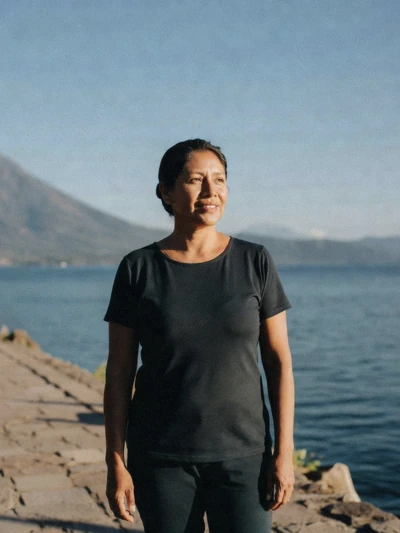
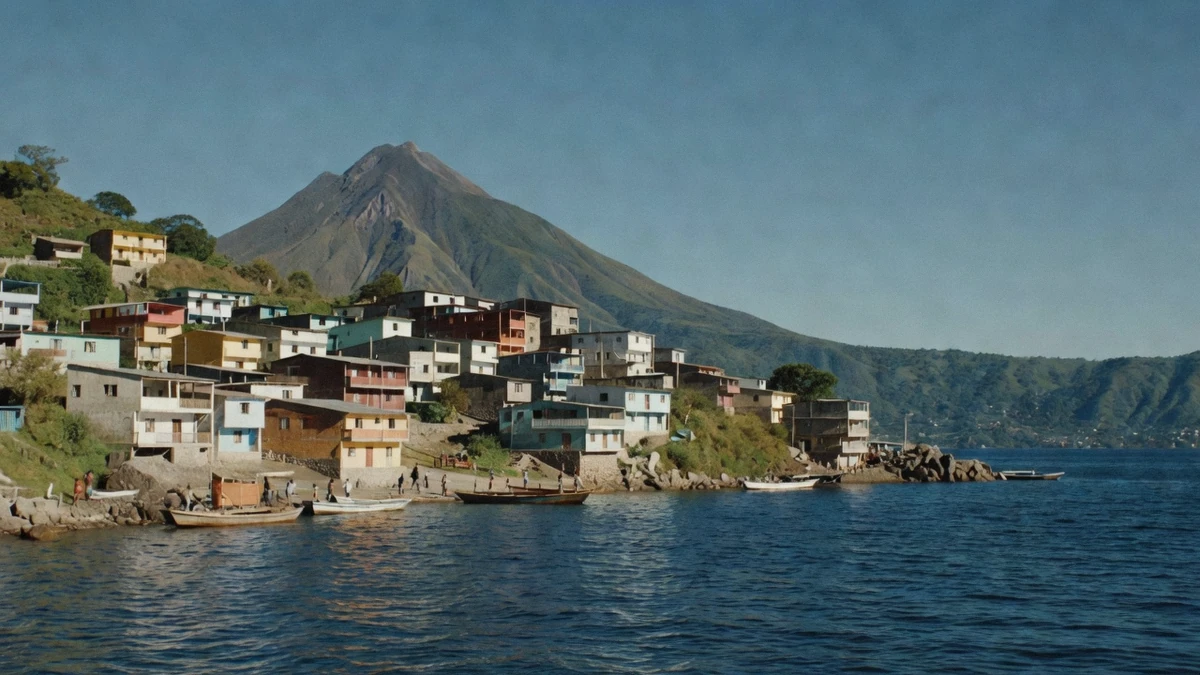
Twelve lakeside towns are connected by Lake Atitlán's water taxi network, and no single visitor sees all of them in one trip. Each has a different character, a different language, a different reason to get off the boat: San Juan la Laguna for its weaving cooperatives, Santiago Atitlán for its scale and its history, San Marcos la Laguna for a quiet afternoon by the water. Panajachel is where nearly everyone starts, but it's the services town, not the cultural stop. This guide runs through the Lake Atitlán villages worth planning around, what each one is actually for, how many you can realistically fit into a single day on the water, and where the village boat tours on Lake Atitlan actually go.
Quick answer
San Juan la Laguna (textiles and weaving cooperatives), Santiago Atitlán (the largest town, home to the folk saint Maximón) and San Pedro la Laguna (budget food and lodging) are the three most visited stops. San Marcos la Laguna and Santa Cruz la Laguna reward a slower, quieter day. Most day tours cover two to three villages, not all twelve.
Key takeaways
- San Juan la Laguna: the textile village, natural plant and bark dyes, weaving cooperatives
- Santiago Atitlán: the largest town on the lake, home of Maximón and the 1547 church of Santiago Apóstol
- San Pedro la Laguna: cheapest food and lodging, the lake's backpacker hub
- San Marcos la Laguna: the wellness and yoga village, home to Cerro Tzankujil reserve
- Most travelers realistically see two to three villages in a day; see how the boats connect them
- A guided option like the full-day three-village cruise covers San Juan, San Pedro and Santiago in one trip
The Villages at a Glance
A quick reference before the detail below. Time needed assumes a single stop as part of a day trip, not an overnight stay.
| Village | Language | Known for | Time needed | Dock |
|---|---|---|---|---|
| Panajachel | Spanish (services town) | Hotels, ATMs, the main dock, Calle Santander market | Half day if overnighting here | Embarcadero de Panajachel |
| San Juan la Laguna | Tz'utujil | Weaving cooperatives, natural dyes, galleries | 2–3 hours | Small public dock, steep street up |
| San Pedro la Laguna | Tz'utujil | Budget food and lodging, nightlife, volcano trailhead | 2–4 hours or overnight | Two public docks (Indian Nose / town side) |
| Santiago Atitlán | Tz'utujil | Maximón, the 1547 church, Friday and Sunday market | 2–3 hours | Central public dock |
| San Marcos la Laguna | Kaqchikel | Yoga and wellness centres, Cerro Tzankujil reserve | 2–3 hours | Single narrow path up from the dock |
| Santa Cruz la Laguna | Kaqchikel | Quiet lakeside lodges, dive shop, steep village | Half day, best unhurried | Small public dock, no real road access |
Six villages get real detail below because they're the ones most day tours and DIY itineraries build around. Six more towns, Jaibalito, Tzununá, San Antonio Palopó, Santa Catarina Palopó and San Lucas Tolimán among them, sit on the same water taxi network and reward a slower, less scheduled visit. Santa Catarina and San Antonio Palopó sit on the sheltered eastern shore, which is why boats headed there stay usable even when the crossing to the western villages turns rough.
Panajachel, the Gateway
Panajachel, usually called Pana, is where almost every visitor starts, and it's worth being clear about what it is: the services town, not a Maya village experience. It has the widest hotel range on the lake at every budget, functioning ATMs, road connections to the rest of Guatemala, and the main public dock, the Embarcadero de Panajachel.
Calle Santander is Panajachel's main tourist street, lined with a craft market, restaurants and tour operators. It's a reasonable base for a first night or two, particularly if you're arriving late or need cash and connectivity before heading further around the lake, but it isn't the reason people come to Lake Atitlán. Save your time for the villages below, and treat Panajachel as the logistics stop, covered in more depth in getting to Lake Atitlán.
San Juan la Laguna, Textiles and Natural Dyes
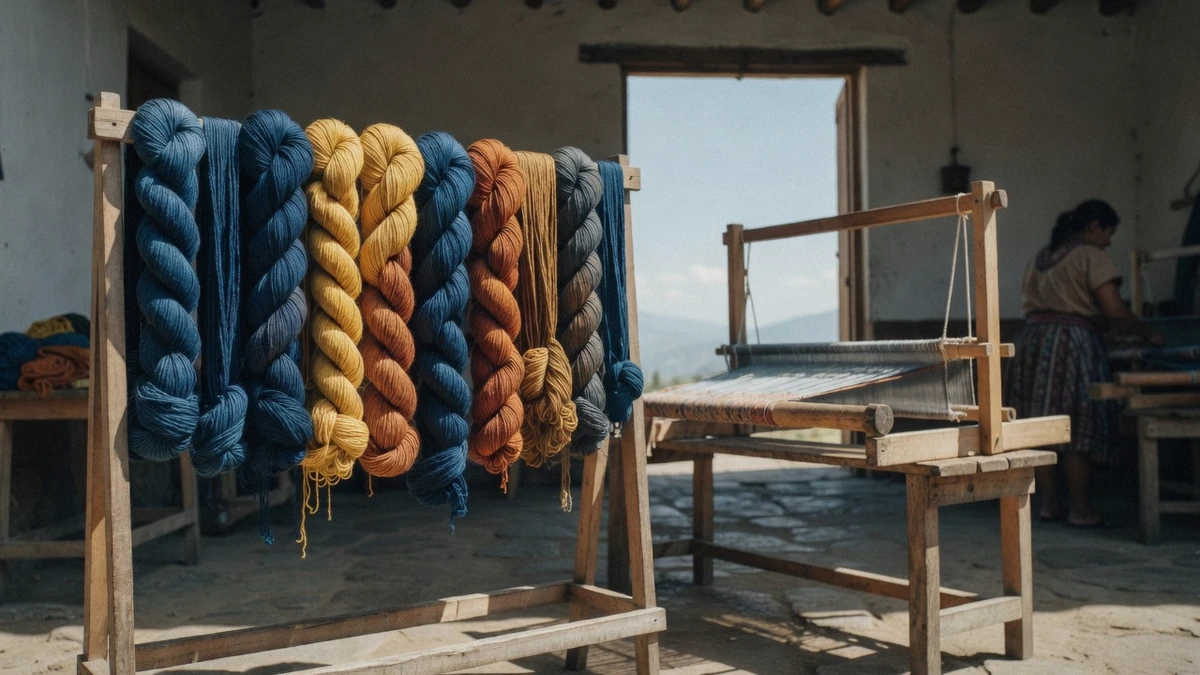
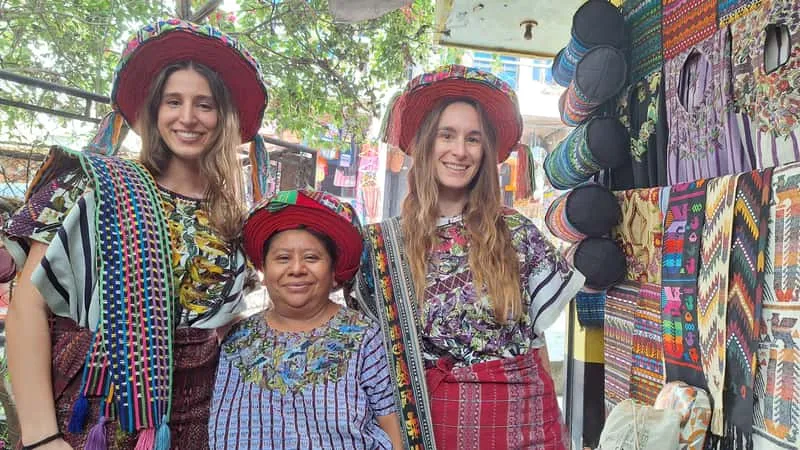
San Juan la Laguna is a Tz'utujil town and the lake's textile and art village. Women's weaving cooperatives here work with natural plant and bark dyes rather than synthetic ones, and a visit typically includes watching the dyeing process, seeing looms in use, and browsing finished pieces directly from the cooperative rather than a resale stall. The village also has small painting galleries, murals along its steep main street, medicinal-plant workshops and a handful of small coffee cooperatives.
It's the quietest of the lake's big-name stops, without San Pedro's bar scene or Santiago's scale, and it's the village most day tours build a workshop visit around for exactly that reason. The dock sits at the bottom of a genuinely steep street, so plan for the climb if you're walking up into town rather than being met by a shuttle. The San Juan textile tour is built entirely around this village's cooperatives and a chocolate-making stop.
San Pedro la Laguna
San Pedro la Laguna, also Tz'utujil, is the lake's backpacker and Spanish-school town. It has the cheapest food and lodging on the lake by a wide margin, the most nightlife of any lakeside village, and it's the trailhead for the San Pedro volcano climb, a separate full-day undertaking from a boat stop. Two public docks serve the town depending on which side you're arriving from.
San Pedro rewards more time than a quick boat stop, particularly for travelers combining Atitlán with a Spanish course or a longer stay, but it also works as a shorter stop on a multi-village day if nightlife and Spanish schools aren't the draw. It's a common leg on shared-boat itineraries that also cover San Juan and Santiago, including the full-day three-village cruise.
Santiago Atitlán, the Largest Town
Santiago Atitlán is Tz'utujil and the largest town on the lake by population. Its original Tz'utujil name is Tz'ikin Jaay, house of birds. The church of Santiago Apóstol, built by Franciscans around 1547, holds colonial-era altarpieces and is where Catholic and Maya religious practice visibly blend, worth the stop even for visitors who aren't tracking the history in detail.
Santiago is also home to Maximón, also called Ri Laj Mam, a folk saint housed in a rotating cofradía household. Which household hosts him changes from year to year, so finding the right house genuinely requires a local guide or a resident's direction rather than wandering with a map. Village access itself is free; the customary offering at the Maximón house runs Q10 to Q20 (about $1.30–$2.60), or cigars or alcohol are also accepted.
Photographs inside the house are usually charged separately and are entirely at the cofradía's discretion, not something you can assume is included. The busiest market days in Santiago are Friday and Sunday, worth timing a visit around if a working market matters to you.
Santiago is covered by several tours running from Panajachel, including the shared lancha to San Juan and Santiago, and by the speedboat tour that also stops in San Pedro.
Practical detail for the villages most day tours reach:
| Village | Maya language | Busiest days | Dock walk into town |
|---|---|---|---|
| Panajachel | Kaqchikel | Daily, Calle Santander | At the foot of the street |
| San Juan la Laguna | Tz'utujil | Steady all week | Steep, 5 to 10 minutes uphill |
| San Pedro la Laguna | Tz'utujil | Steady all week | Short, two docks in use |
| Santiago Atitlán | Tz'utujil | Friday and Sunday market | 5 minutes, then uphill to the church |
| San Marcos la Laguna | Kaqchikel | Steady all week | One narrow path up from the dock |
| Santa Cruz la Laguna | Kaqchikel | Quiet all week | Very steep climb to the village proper |
San Marcos la Laguna
San Marcos la Laguna is a Kaqchikel village and the lake's yoga, meditation and wellness centre, small enough that a single narrow path up from the dock serves as its main street. It's the village to pick if a slow, unstructured afternoon matters more than sightseeing.
The main draw is Cerro Tzankujil nature reserve, open daily from 08:00 to 17:00, with entry around Q25 for adults and Q15 for children under 12 (about $3.30 and $2.00). The reserve has trails, lake viewpoints and a wooden jumping platform into the water. Reported platform heights vary by source: the operator running the cliff-jump tour states 12 meters, while the reserve's own platforms are commonly described as 3, 5 and 8 meters.
Treat that as a range rather than a single confirmed figure, and expect the actual jump you're offered to depend on which platform is in use that day. One important clarification worth repeating: San Marcos la Laguna, the lake village, is a completely different place from San Marcos department, which sits on the Mexican border and carries a separate, more serious US travel advisory.
The adventure tour with the Tzankujil cliff jump and the private tour with the Tzankujil swim both build a stop here into the day.
Santa Cruz la Laguna and the Quieter Shore
Santa Cruz la Laguna is Kaqchikel and the quietest of the lake's well-known stops. It's also the steepest village on the water, has no road access worth the name, and reaching it means arriving by boat, no shortcuts. A dive shop and a handful of lakeside lodges make it a genuinely good half-day pick, but it's a poor choice for a rushed multi-stop tour; there isn't enough packed into a short window to justify a quick in-and-out visit here.
Beyond the six villages detailed here, Jaibalito and Tzununá sit on the same quiet western stretch as Santa Cruz, while Santa Catarina Palopó, San Antonio Palopó and San Lucas Tolimán lie on the calmer eastern shore. Those last two towns are also the wet-weather substitutes several operators divert to when the open crossing gets too rough, a detail covered in full on the best time to boat tour Lake Atitlán guide.
Which Villages to Pick, by What You Came For
If you want to see textiles and buy directly from a weaving cooperative
San Juan la Laguna is the village built around exactly that.
If you want the deepest cultural stop, including Maximón and colonial history
Santiago Atitlán, ideally timed for a Friday or Sunday market day.
If you're on a tight budget or want a longer stay with a social scene
San Pedro la Laguna has the cheapest food and lodging on the lake.
If you want a slow, quiet afternoon rather than a checklist of sights
San Marcos la Laguna or Santa Cruz la Laguna, not a multi-stop day tour.
If you only have one day on the water and want the best overview
a tour covering three villages, like San Juan, San Pedro and Santiago together, is the efficient pick.
How Many Villages Fit in One Day
Two to three villages is realistic in a single day on the water, and most of the shared tours running from Panajachel are built to exactly that rhythm rather than trying to cram in more. Boat transfer times between the main stops generally run 15 to 45 minutes each way, so a day that includes San Juan, San Pedro and Santiago, for example, spends a meaningful chunk of the day actually on the water between them, not only ashore.
Trying to add a fourth or fifth village in the same day usually means cutting each stop short enough that the visit stops being worthwhile, particularly at Santiago, where finding Maximón alone can take real time. If you have more than one day, splitting villages across two separate trips, one built around textiles and culture, another around a quieter half day at San Marcos or Santa Cruz, generally beats trying to see everything at once. For how the public boats themselves run between stops, see the lancha guide.
Visiting Respectfully
These are living communities, not a backdrop for photographs. Ask before photographing people, always, and understand that in Santiago Atitlán the cofradía that hosts Maximón decides on its own terms whether photography is allowed inside the house at all; assume it isn't until you're told otherwise, and expect a separate charge if it is.
A few practical habits that go a long way:
- Buy textiles and crafts directly from the weaving cooperatives in San Juan rather than only from resale stalls
- Dress modestly when entering churches, including the church of Santiago Apóstol
- Ask before entering someone's workshop or home, even when a door is open
- Keep offerings at the Maximón house genuinely customary in scale, Q10 to Q20 or a small gift, not an inflated tourist price
- Learn a village's name in the local language, Tz'utujil or Kaqchikel depending on where you are, as a basic courtesy
A short list worth reading before you step off the boat:
- Ask before photographing anyone, and accept no as an answer
- In Santiago Atitlán the cofradía decides whether photos are allowed at the Maximón house, not you or your guide
- Buy directly from the cooperatives rather than haggling hard, the prices are already close to the floor
- Dress modestly in Santiago Atitlán, this is a working town rather than a resort
- Carry quetzales in small notes, most village stalls and cooperatives do not take cards
- Learn hello and thank you in Spanish at minimum, Tz'utujil or Kaqchikel if you can
Boat Tours That Cover These Villages
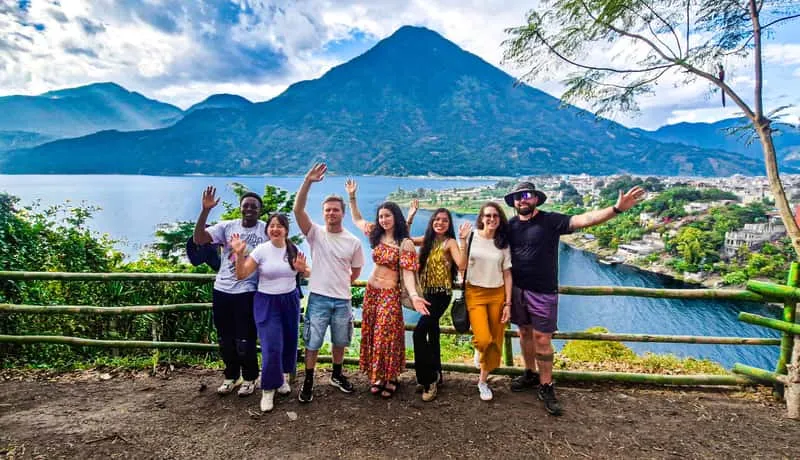
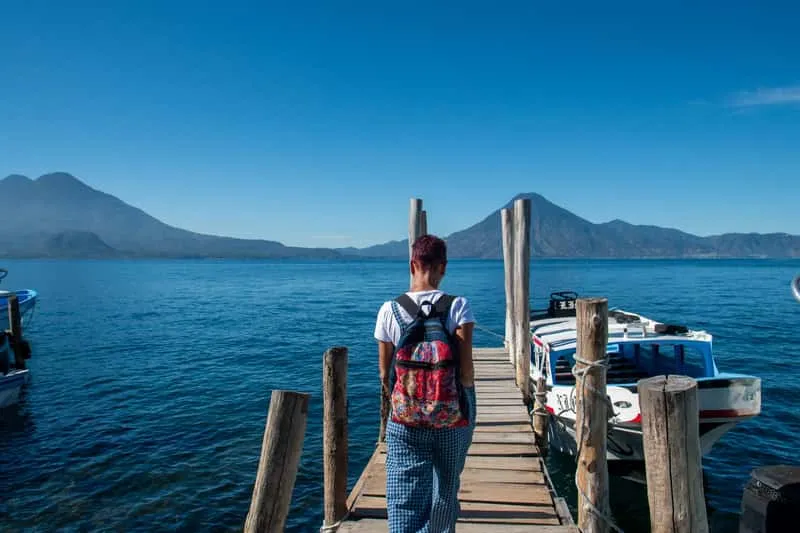
The full-day three-village cruise covers San Juan, San Pedro and Santiago Atitlán in a single $58 trip, 8 hours, with the group capped at 15 people. The shared lancha to San Juan and Santiago runs $40 for 6.5 hours, spending about three hours in San Juan and about two hours in Santiago. For a shorter cultural focus, the small-group cultural boat tour runs $45 for six hours across the lake's Mayan villages. All three save you the logistics of arranging boat transfers and timing between stops yourself.
 from $58
 Full-Day Cruise: Three Villages on Lake Atitlán from Panajachel
Full-day sailing tour from Panajachel to three Lake Atitlán villages: San Juan la Laguna, Santiago Atitlán, and San Pedro. Stops include a women's textile cooperative, honey tastings, and…
- Sailing across the caldera to three villages
- Women's textile cooperative in San Juan la Laguna
- Honey, bees & chocolate tastings
- Small group — max 15 travelers
 from $40
 Shared Lancha: Panajachel to San Juan la Laguna & Santiago Atitlán
Cruise Lake Atitlán by shared lancha from Panajachel's dock to San Juan la Laguna and Santiago Atitlán. A bilingual guide leads village stops including a textile cooperative, natural…
- Shared lancha from Panajachel's main dock
- San Juan la Laguna textile cooperative & natural dyes
- Santiago Atitlán colonial market
- Bilingual English/Spanish guide included
 from $45
 Small-Group Cultural Boat Tour: Mayan Villages on Lake Atitlán
Small-group boat tour limited to 15 travelers, departing Panajachel for a full day of Mayan village visits on Lake Atitlán. Includes artisan craft workshops, weaving cooperatives, and local…
- Small group — max 15 travelers
- Full-day Mayan village immersion
- Artisan craft & weaving workshops
- Pickup included from Panajachel
There's no single correct route around Lake Atitlán's villages, only a genuine trade-off between depth and coverage. Picking two villages and actually spending real time in each will almost always beat a rushed pass through four, and the character of San Juan, Santiago and San Marcos is different enough that no single stop stands in for the other two.
Frequently Asked Questions
Which village on Lake Atitlán is worth visiting most?
It depends what you're after. San Juan la Laguna is the strongest single pick for textiles and cooperatives, while Santiago Atitlán gives the deepest cultural visit, including Maximón and the 1547 church of Santiago Apóstol. Most first-time visitors are well served combining the two.
How many Lake Atitlán villages can you see in one day?
Realistically two to three, given that boat transfers between stops run 15 to 45 minutes each way. Tours like the full-day three-village cruise are built around exactly that pace rather than trying to cover more.
What is San Juan la Laguna known for?
Weaving cooperatives that dye textiles with natural plant and bark dyes, along with small painting galleries, murals and medicinal-plant workshops. It's the quietest of the lake's major stops and the one most workshop-focused tours are built around.
Who is Maximón and where do you find him?
Maximón, also called Ri Laj Mam, is a folk saint honored in Santiago Atitlán and housed in a rotating cofradía household that changes from year to year, so a local guide or resident is genuinely needed to find the current house. The customary offering runs Q10 to Q20.
What language do people speak in the Lake Atitlán villages?
Mostly Tz'utujil in San Juan la Laguna, San Pedro la Laguna and Santiago Atitlán, and Kaqchikel in San Marcos la Laguna and Santa Cruz la Laguna. Spanish is widely spoken as well, particularly in the more visited towns.
Is it rude to photograph people in the villages?
Ask first, always. In Santiago Atitlán specifically, the cofradía hosting Maximón decides whether photography is allowed inside the house at all, and it's usually charged separately when it is.
Which village is best for a quiet day?
San Marcos la Laguna or Santa Cruz la Laguna. Both are small, calmer than San Pedro or Santiago, and better suited to an unhurried half day than a checklist-style stop. See the lancha guide for how to reach them on the public boats.